
DIY Stereo Speakers
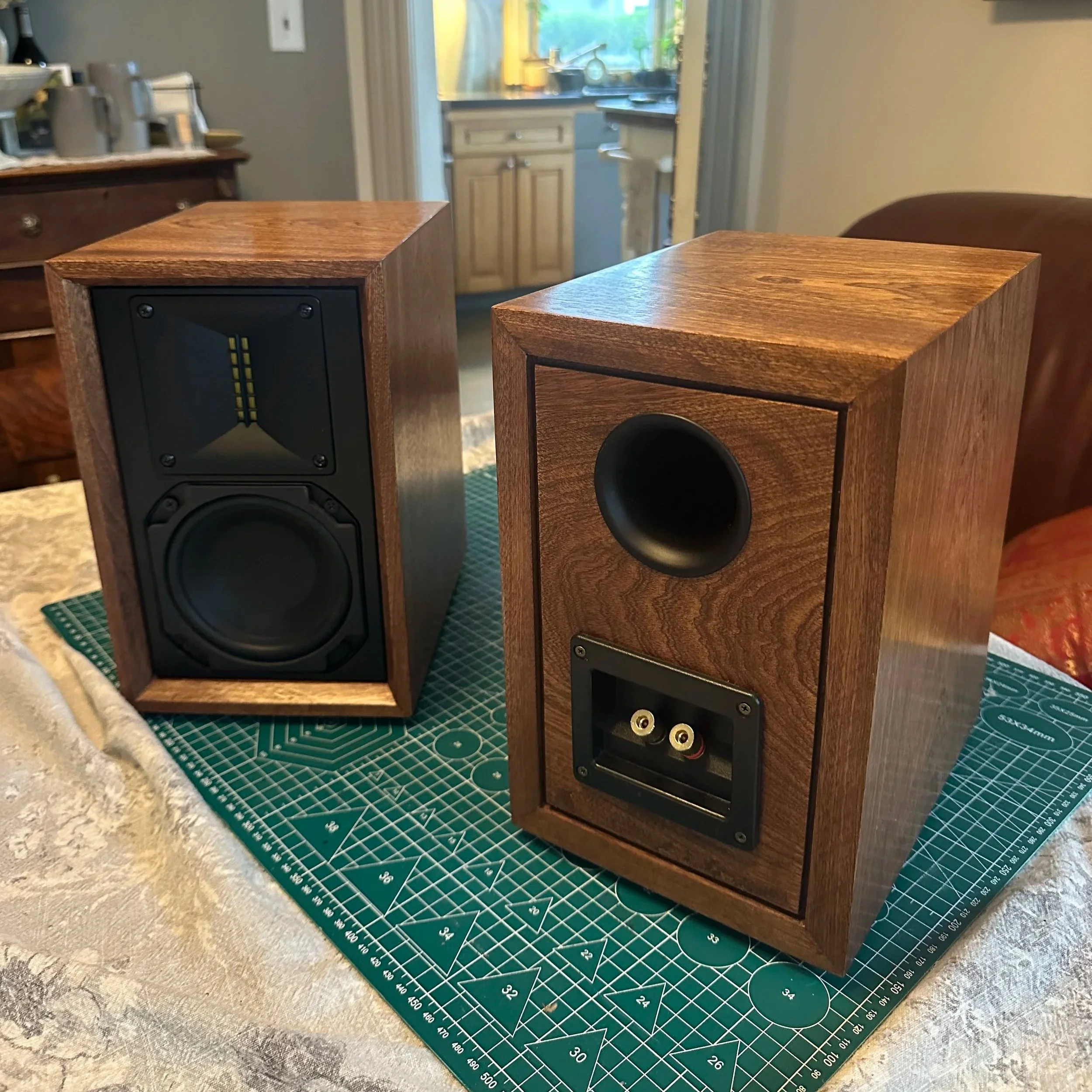
Final Product
Overview:
When one of my stereo speakers blew out, I saw an opportunity to build a custom pair from scratch rather than buy replacements. This project combined mechanical design, woodworking, and electronics assembly over a two-month period from April to May.
Skills & Tools:
CAD design (AutoCAD), woodworking (table saw, band saw, router, planer, disk sander), laser cutting, circuit assembly and soldering, 3D printing, finishing techniques, acoustic design principles
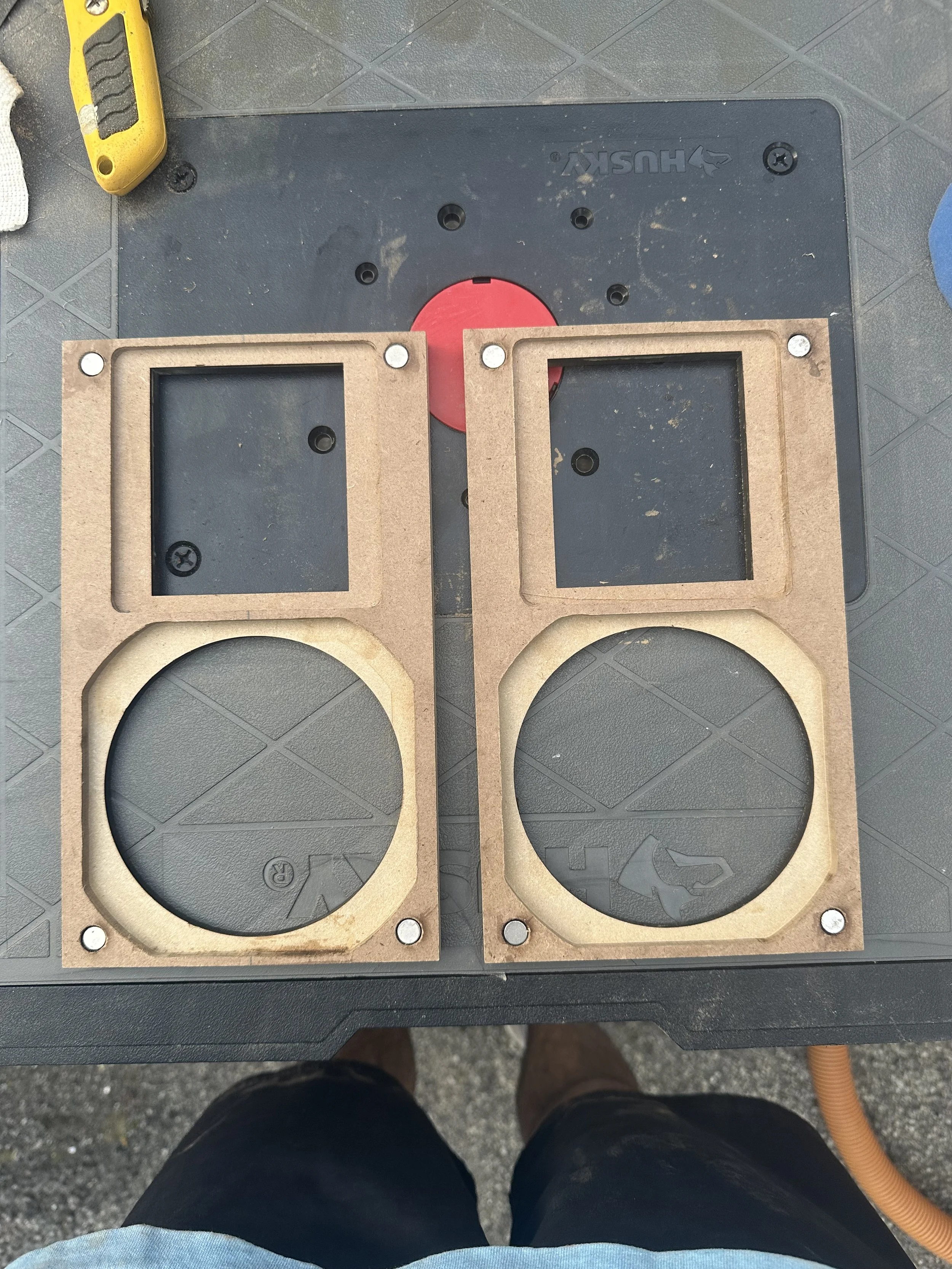
Laser Cut MDF Panels with Magnets Inset
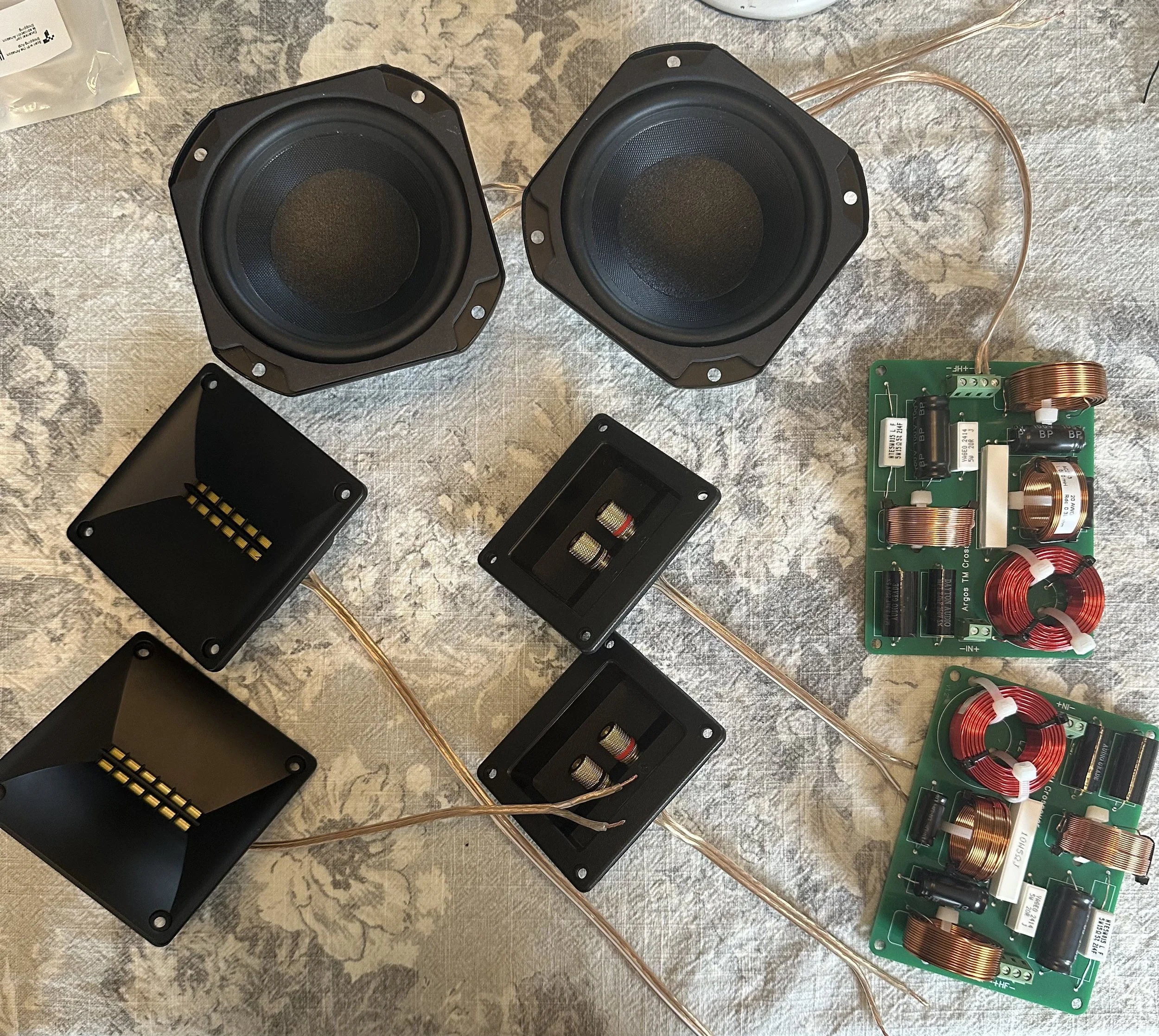
Fully Wired
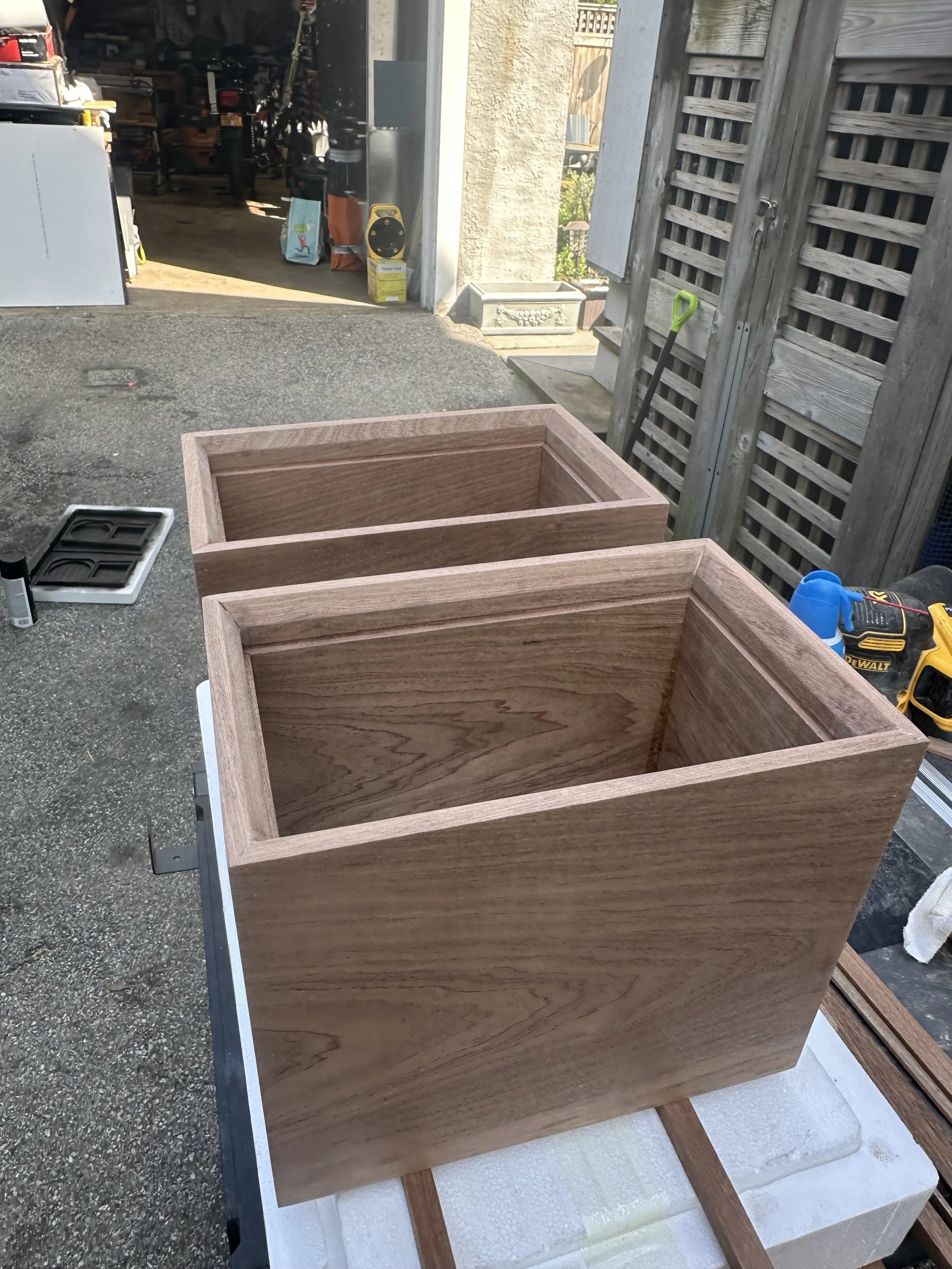
Post Front Chamfer and Glue
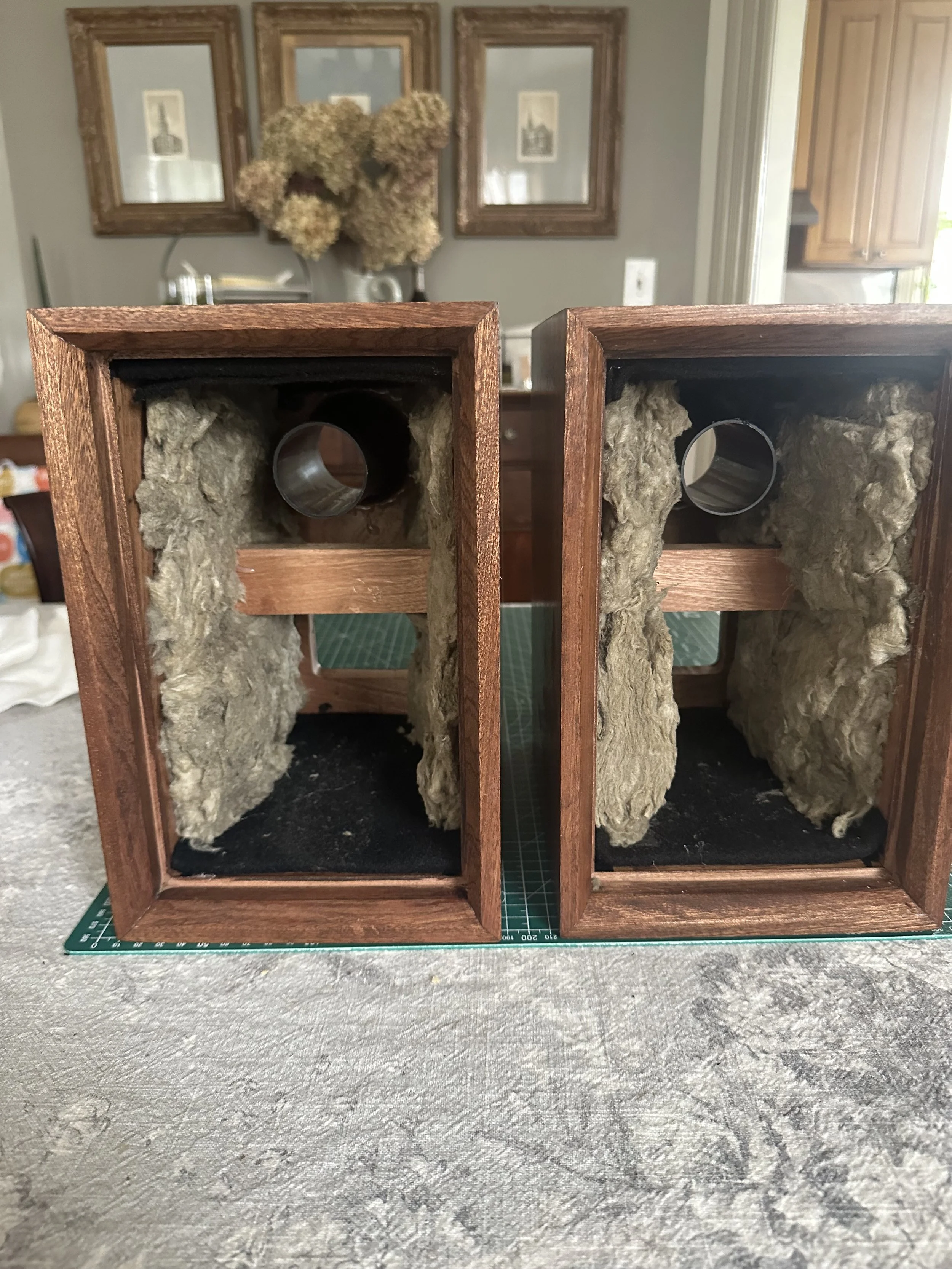
Internal Acoustic Components and Baffle
Project Details:
Design & Component Selection
I selected the Faital Pro 5FE120 mid-range driver and Beston RT002A ribbon tweeter based on the Argos TM bookshelf speaker design guide. While I followed an existing crossover circuit diagram due to equipment limitations, I designed the entire enclosure from scratch in Solid Works and AutoCAD, maintaining only the required internal chamber volume for acoustic performance.
Enclosure Construction
The enclosure uses 1/2” mahogany panels for all sides except the front panel. I chose mahogany for its aesthetics and availability. The front panel consists of multiple layers of laser-cut MDF, which allowed precise insets for the drivers and integrated mounting points for magnetic grille attachment.
The most challenging aspect was machining symmetric chamfers and fillets on all four side panels while maintaining 90-degree alignment. Any deviation would compound across the assembly.
Fabrication & Assembly
Tools used: laser cutter, table saw, band saw, disk sander, router, and planer.
I hand-soldered the crossover circuit following the provided diagram. The mahogany panels were finished with progressive sanding and oil treatment, while the MDF front panel was spray painted. I designed and 3D printed custom grille frames that hold acoustically transparent fabric and attach via embedded magnets.
Results
The speakers deliver high-end sound quality with exceptional mid-range performance. The ribbon tweeter provides detailed highs, and the overall output is impressive for bookshelf-sized speakers.
Total project cost: approximately $330.
Future Work
In my next build, I plan to design custom crossover networks rather than using existing designs. This will require getting frequency response testing equipment and developing deeper expertise in the electrical engineering aspects of speaker design.
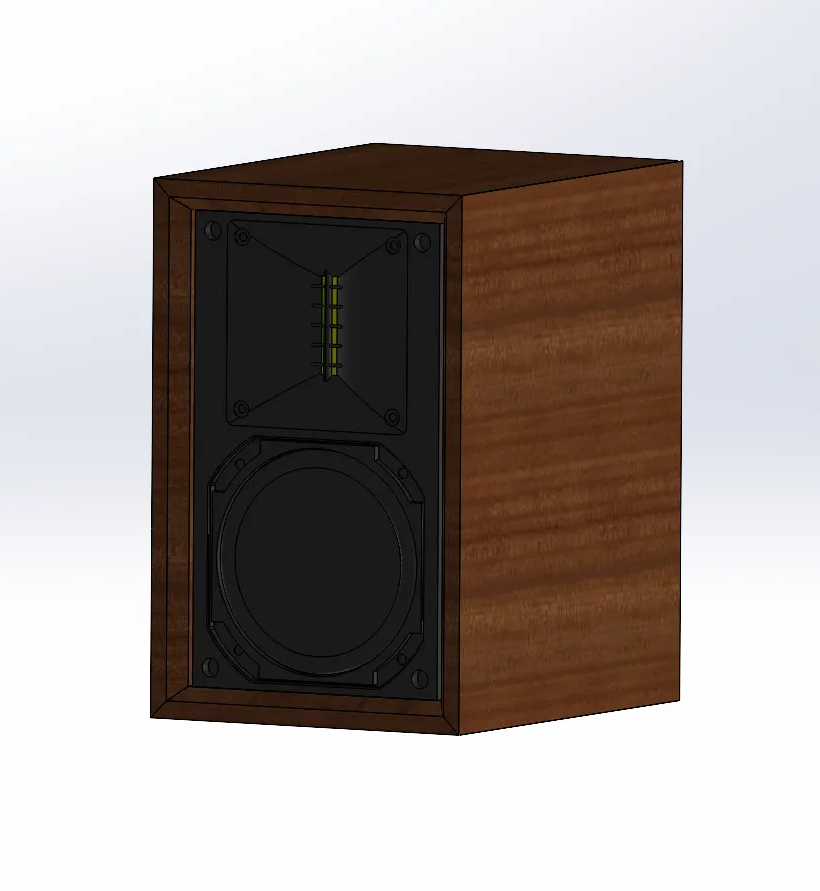
Solidworks Model (front)
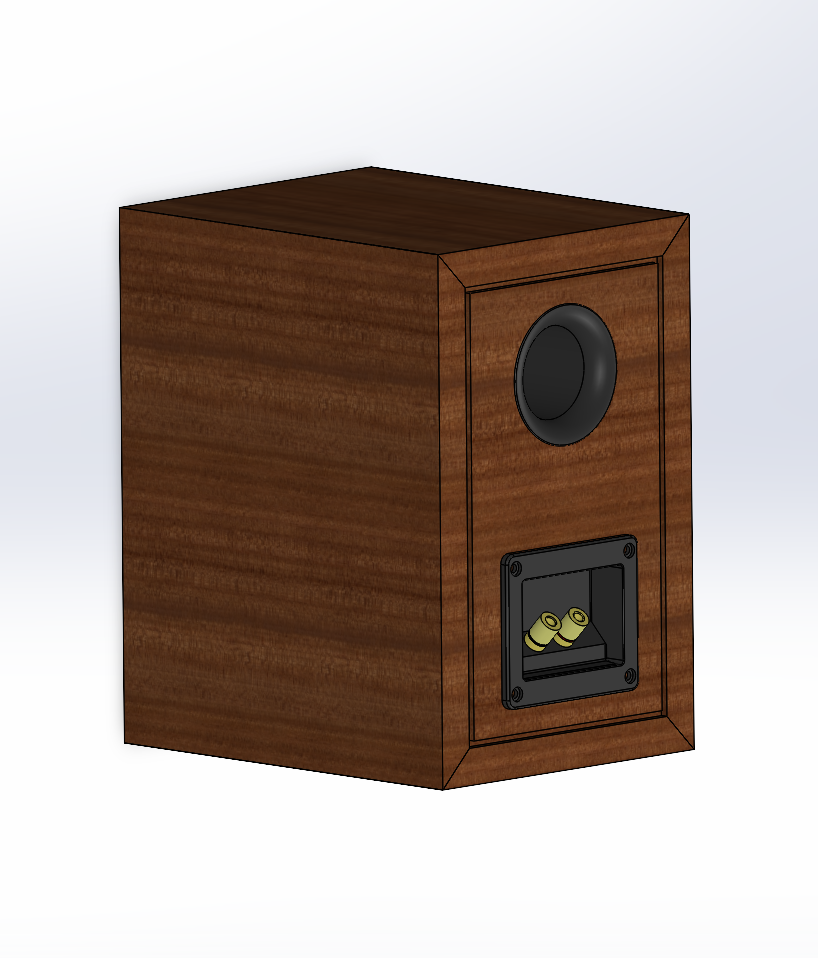
Solidworks (rear)
